

Gluten Free French Bread Recipe
Posted: 6/10/19 Updated: 8/31/21
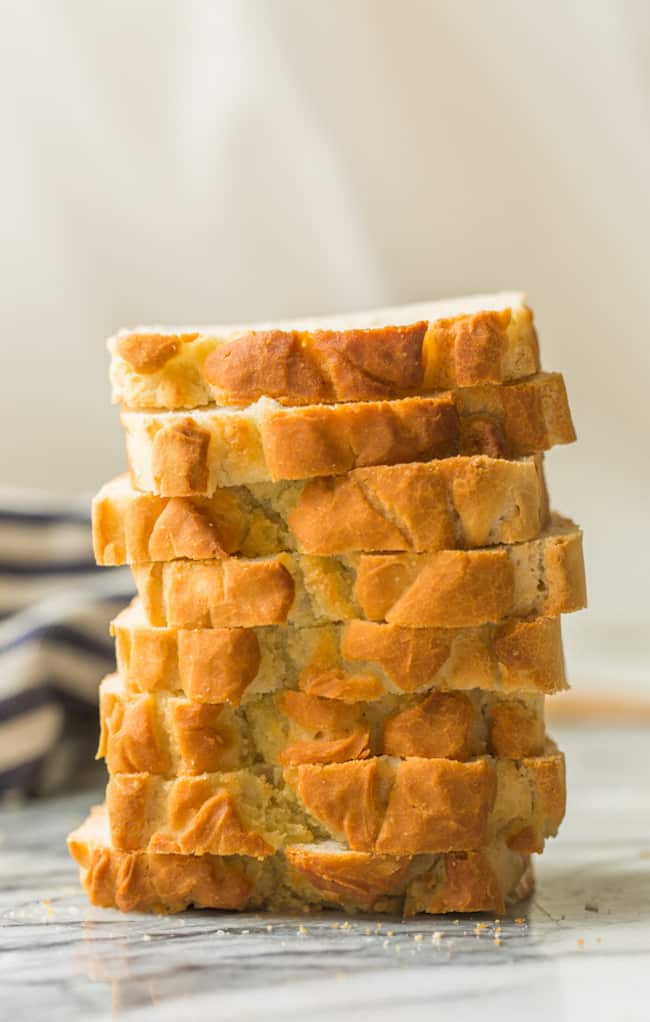
Learn how to make this soft and chewy gluten free bread recipe! It's easy to make without too many ingredients and too many complicated steps. If you've been missing bread in your gluten free diet then look no further with this recipe!
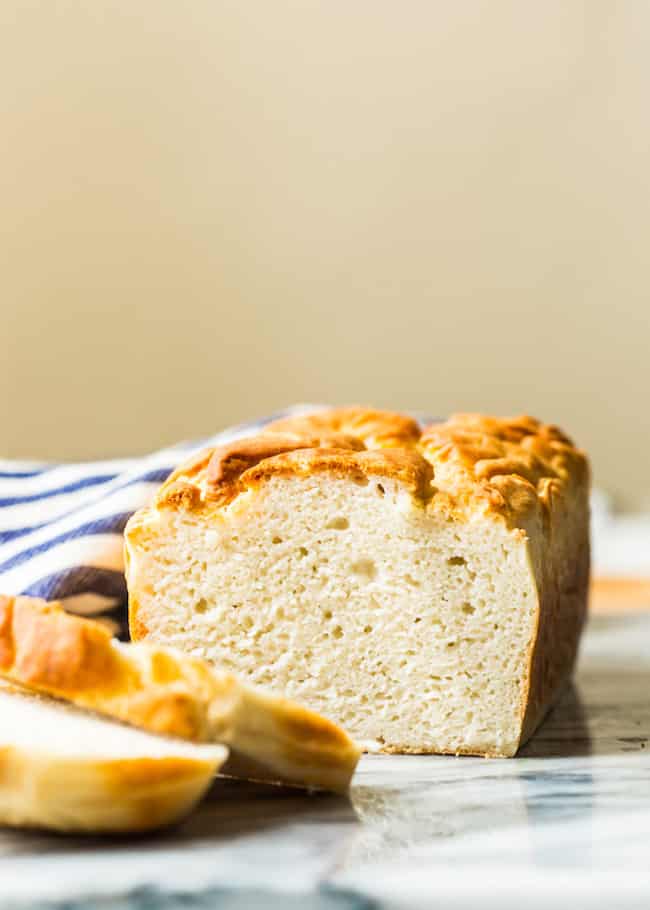
Bread
Who doesn't love it? Fresh out of the oven, crusty, artisan bread slathered with butter, or drizzled with olive oil? Gimme all the bread.
It's the perfect accompaniment to pretty much any main dish while also being just as satisfying on its own.
It's also the destroyer of diets with its carb filled goodness and an actual source of pain for the millions of people who are afflicted with Coeliac Disease or gluten intolerances. Historically, gluten free breads have been…well…sad. Dry, crumbly, tasteless, not to mention expensive. Thankfully, as time goes on and the demand for gluten free products increases we're getting better at making do sans gluten without compromising taste and texture.
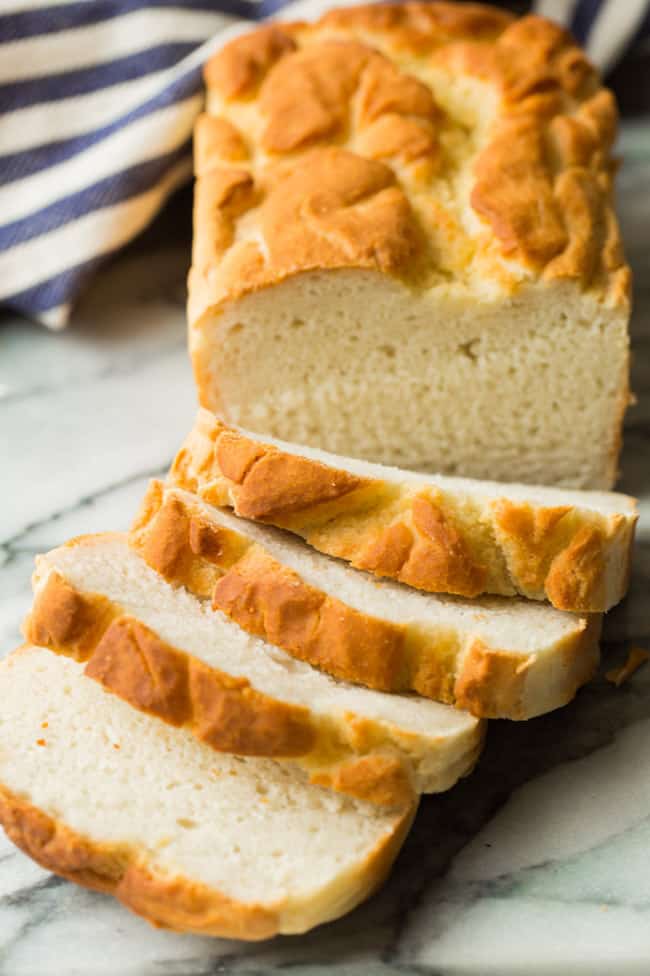
Homemade Gluten Free Bread Recipe
Altogether this bread is made up of about 10, fairly basic ingredients without too much effort.
Unlike a lot of really great gluten free recipes this bread only requires two different types of flours: rice and tapioca. Since I first made this bread years ago rice & tapioca flour have become one of my favourite combos whenever I'm looking for an easy GF flour blend (like in these Yorkshire Pudding).
Start out by simply whisking together most of your dry ingredients: flours, salt, xanthan gum and baking powder. Set that bowl aside.
Next up, dissolve your sugar in the warmed water. You want your water to be warm to the touch, but not hot. Too hot and the heat will kill the yeast which will prevent the bread from rising.
Once the sugar has almost completely dissolved, stir in the yeast and then let the mixture sit aside for about 5-10 minutes as the yeast foams up.
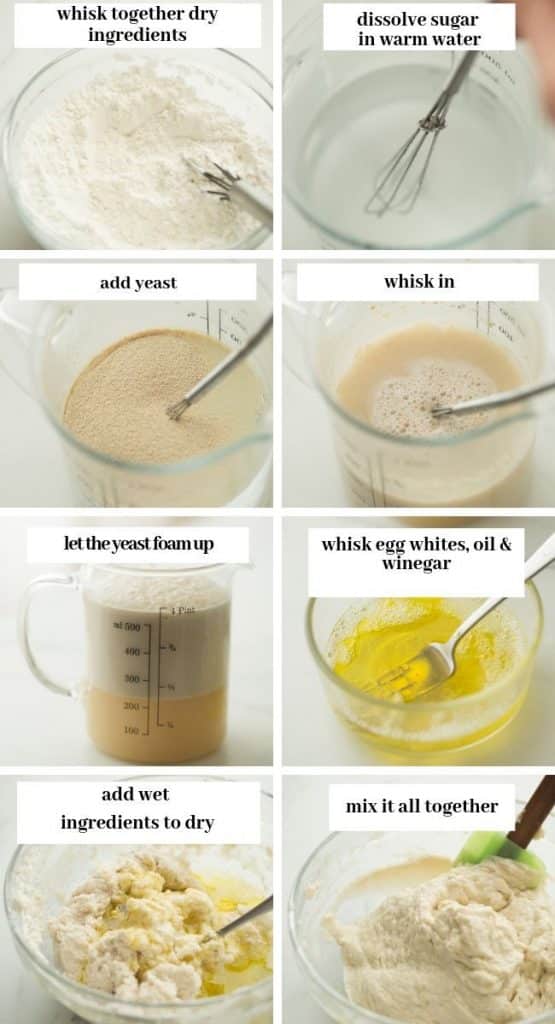
As the yeast foams up, whisk together the eggs, oil and vinegar in another small cup or bowl. You don't need to mix too much, just enough to get the egg whites slightly foamy.
Once mixed and the yeast has activated, add everything to the flour mixture and mix well to combine. Your dough is going to look very wet and very unusual. As long as you mix until no lumps of flour remain you're alright.
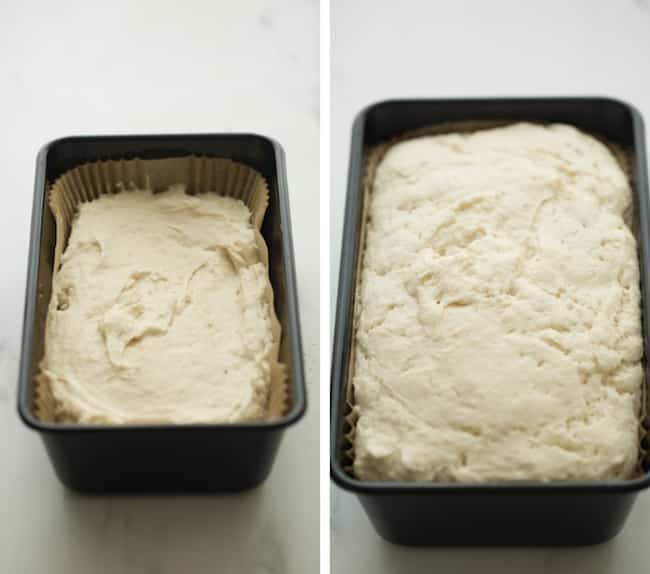
Finally, spoon your batter into a prepared loaf pan, set aside in a warm place, cover and let rise at least 30 minutes. The bread should have risen by at least 30%.
When you're ready to go, place in your preheated oven and bake for 35-40 minutes and that's it. Let the bread cool for at least 15 minutes and then enjoy!
Tips
- Since there is no gluten to over work, don't be afraid of mixing this bad boy up. If you have a stand mixer, that's perfect. If you don't have a stand mixer, give yourself a good arm workout and put some elbow grease into it. I tried this out with an electric handheld mixer, and while it did eventually work, I wouldn't use it again because my dough kept getting stuck.
- Your fully mixed dough will look very wet. The first time I made a gluten free dough, I was concerned I had messed up somewhere along the lines because my dough was sticky, wet, and needed to be spooned into my bread pans.
- I find this to be true with baking in general, but especially when working with yeast please make sure to use room temperature ingredients so that the yeast has the opportunity to rise properly.
Yes! You can find the egg free/vegan version of this bread by clicking through to the link here. Instead of using egg whites, that recipe using aquafaba (the goopy liquid found in cans of beans). Weird, but it works!
- You can use brown or white rice or a combination of the two.
- You can use arrowroot starch in place of tapioca flour.
- Beyond those changes I haven't played around much with other types of flours. I do think you could probably use potato starch as well in place of the tapioca but I can't say for sure yet. I am currently working on a grain free/paleo bread so stay tuned if you're interested in something like that. (Update: Everything Bagel Almond Flour Bread)
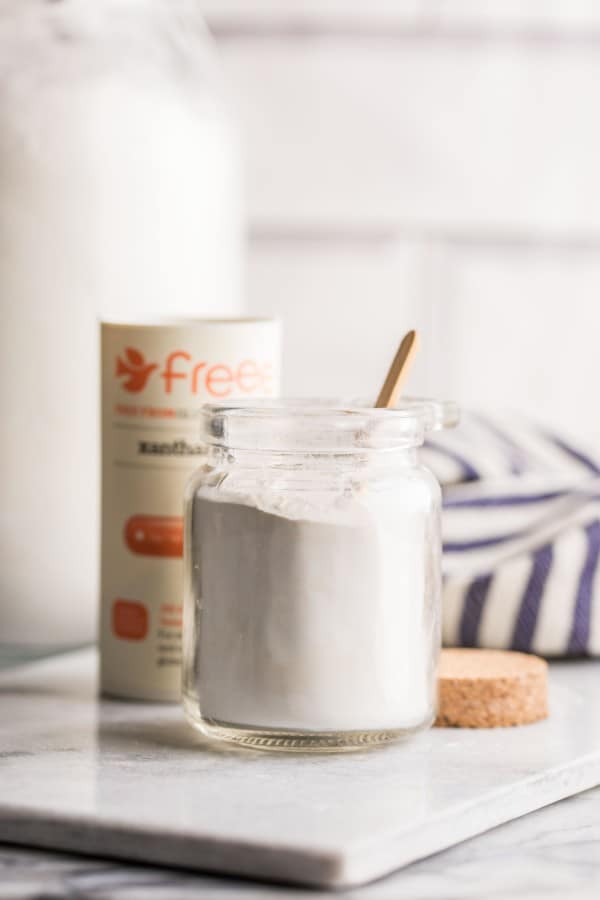
Xanthan gum does a couple of things in this recipe: it helps hold on to moisture (something gluten free goods are often desperate for) and provides added structure which is something that gluten would normally provide. Without xanthan or some kind of binder gluten free goods can be dry & crumbly.
Xanthan Gum & Gluten Free Baking
Still have a few questions about xanthan gum? Check out my post explaining the how, when and why xanthan gum is important for gluten free baking and how you can sub it out!
Learn More
If you can't buy or use xanthan you can use guar gum instead. Both of these can usually be found in the baking or gluten free section of major grocery stores. If all else fails you can always find these on Amazon.
Your water was too hot or too cold. Too hot will kill the yeast and too cold it won't fully activate.
Your yeast is already dead. Yeast has a shelf life of about 4 months. It can last longer than that but there's no guarantee. If it's been awhile since you last used it you may need to buy more.
The sugar helps us to see that the yeast is working as it's what makes it foam up. It's not actually 100% necessary for the bread, though a little sugar does help with the flavour. If for whatever reason you can have or don't want to use sugar just leave it out.
- Sugar subs like erythritol & swerve won't work for the yeast.
- Honey, maple and coconut sugar all work.
If you have any more questions please let me know in the comments below!
FACEBOOK | INSTAGRAM | PINTEREST
Don't forget to #asaucykitchen on instagram if you make this Gluten Free Bread! We love seeing what you make! You can also post your pictures to my facebook page!
Ingredients
- 2 cups rice flour (white or brown), | 280 grams
- 1 cup tapioca flour, | 100 grams
- 1 tablespoon xanthan gum*
- 1 teaspoon gluten free baking powder
- 1 teaspoon salt
- 1 1/2 cups |360 ml lukewarm water, between 105-110 degrees F, 40-43C
- 1 1/2 tablespoons gluten free quick rise yeasts
- 2 tablespoons sugar
- 2 tablespoons olive oil
- 3 egg whites, lightly beaten
- 1 teaspoon apple cider vinegar (you can substitute for another vinegar if you don't have ACV
Need help converting to weights? Check out my cups to grams Conversion Guide.
Instructions
- Whisk together your flours, xanthan gum, salt and baking powder.
- In a another bowl or jug mix your hot water and sugar together, stirring occasionally until your sugar dissolves. Once the sugar dissolves, gently stir in your yeast. Let the yeast foam up for a few minutes.
- While the yeast is foaming up, beat together your three egg whites slightly. Mix in the oil and vinegar.
- Pour the yeast mixture to the flour mixture along with the eggs and mix it all together. Make sure to mix everything until no lumps remain.
- Grease or line 2 (8x4 inch) loaf tin or one french bread pan and spoon your batter into each tin. Cover and stash in a warm place for at least 30 minutes. I like to stow my dough in the microwave or a warmed but off oven for rising process because it keeps my dough free from drafts and disturbances.
- After your dough has risen by about 30% (about 30 minutes) preheat your oven to 400°F/ 200°C. Place in the middle and bake for 35-40 minutes, turning the dough about half way through for an even bake.
- Remove from the pan and cool on a wire rack for at least 15 minutes until you're ready to slice and serve.
Notes
Recipe lightly adapted from Food.com
Can I make it egg free?
- Yes! You can find the egg free/vegan version of this bread by clicking through to the link here.
Can I use different flours?
- You can use brown or white rice or a combination of the two.
- You can use arrowroot starch in place of tapioca flour.
- Beyond those changes I haven't played around much with other types of flours. I do think you could probably use potato starch as well in place of the tapioca but I can't say for sure.
Can I use sugar substitutes or leave out the sugar all together?
- The sugar helps us to see that the yeast is working as it's what makes it foam up. It's not actually 100% necessary for the bread, though a little sugar does help with the flavour.
- If for whatever reason you can have or don't want to use sugar just leave it out. Sugar subs like erythritol & swerve won't work for the yeast.
- Honey, maple and coconut sugar all work.
Do I have to use xanthan gum?
- Xanthan gum does a couple of things in this recipe: it helps hold on to moisture (something gluten free goods are often desperate for) and provides added structure which is something that gluten would normally provide. Without xanthan or some kind of binder gluten free goods can be dry & crumbly.
- If you can't buy or use xanthan you can use guar gum instead. Both of these can usually be found in the baking or gluten free section of major grocery stores. If all else fails you can always find these on Amazon.
Nutrition Information
Yield: 16 Serving Size:
1 Calories: 115 Total Fat: 2g Saturated Fat: 0g Trans Fat: 0g Unsaturated Fat: 2g Cholesterol: 0mg Sodium: 174mg Carbohydrates: 22g Fiber: 1g Sugar: 2g Protein: 2g
This website provides approximate nutrition information for convenience and as a courtesy only. Nutrition data is gathered primarily from the USDA Food Composition Database, whenever available, or otherwise other online calculators.
More gluten free bread recipes you might enjoy:
- Gluten Free Vegan French Bread
- Gluten Free Yorkshire Pudding
- Gluten Free Focaccia with Black Olive & Rosemary
- Gluten Free Pizza with Chorizo Sausage
- Herby Gluten Free Vegan Biscuits
- Everything Bagel Almond Flour Bread
- Gluten Free Manakish Za'atar
Gluten Free French Bread Recipe
Source: https://www.asaucykitchen.com/easy-gluten-free-french-bread/
Posted by: eppersonsatifer.blogspot.com
0 Response to "Gluten Free French Bread Recipe"
Post a Comment